
Inground Pool Construction Costs for 2026

West Michigan Inground Pool Installation Costs

Inground Pool Construction Costs for 2026

The demands and desires to have an inground pool have been high since the days of covid.  The most common question we get is what does it typically cost to build one?  Well, that is a very loaded question and costs have been on the increase since covid by about 33% and with 2025 seeing a significant raise to the minimum wage, we only expect that trend to continue.  This article we will provide some insights to the process, what to expect as you look to build your backyard pool oasis, as well as some cost saving measures to consider.

What is the Cost to build an inground Pool?

There are three main types of inground pools – vinyl liner, fiberglass, and gunnite(concrete) that are built.  Since 1971, we have actually built all three types of inground pools.  The vinyl liner is typically the most flexible for the money and least expensive to build, but you will have to replace your liner about every 10-12 years.  Fiberglass is next and typically runs about 10-15% more in an equal comparison.  This type of pool may need to be painted over the years and if there is a leak that springs, it could be more expensive to actually fix than a liner pool. We have had to pull a few fiberglass shells out of the ground to do repair work over the years.  A Gunnite inground pool typically runs 40-50% more than putting in liner pool. They look great but you pay for them with added costs such as tile and you will need to acrylic paint your gunnite pool probably every 10 years as well and depending on it’s environment, it could require acid washing every couple of years to help keep it clean.   BUT BACK to our original question about cost.  Pools we build typically cost between $70k-$125k based on several factors, features, functions, etc that we will explore in the rest of this article.

Factors Affecting the Cost of an Inground Pool Installation

• The Size and Shape of the PoolLagoon Pools

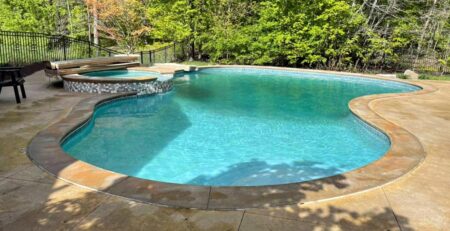
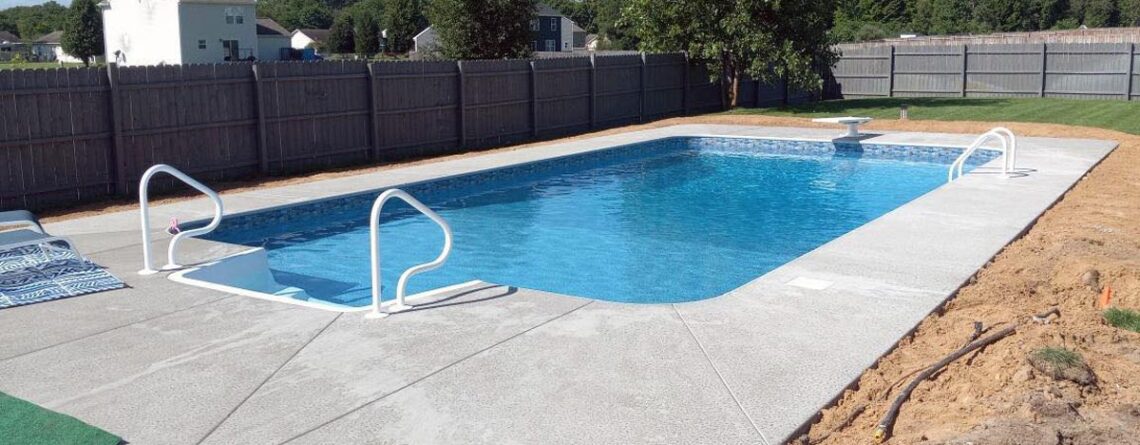
Smaller pools, like with dimensions of 12 feet by 24 feet typically cost less than larger pools, depending on the materials used. The shape of the inground pool can also affect its cost as with liner based steel wall pools you pool can be geometric, freeform or really custom with their size and shape. There is maybe a 8-10% difference between the cost of constructing a freeform pool and a geometric (rectangle) pool of the same size however, you can expect to spend a bit more money long-term if you need additions or repairs to your freeform pool.

• Materials / Product

Common materials used to build in-ground swimming pools include PVC pipe, concrete, steel, fiberglass, and vinyl and your equipment (pump, heater, salt system, automation, lighting, and accessories like ladders, handrails, diving boards, etc).  Vinyl is typically least expensive pool installation type with an average cost of for materials and your “pool kit” of between $30,000 and $60,000 for this portion of your project cost.  As mentioned above, add about 10% for Fiberglass pools and then probably 30-40% for gunnite/concrete pools.  The range is because of optional equipment/product such as heaters, salt systems, automation, lights, diving board, hand rails, etc.  You also have a cost based on how much concrete you want around your pool creating your “pool deck”. 

• Excavation

One of the reasons why the cost of building your pool can be higher is due to excavation costs.  If we cannot dump your dirt onsite somewhere, then there is a lot of machine and dump truck time to haul away dirt.  If you have a clay yard, it can be more difficult to find a dump site that will take that dirt so we may have to transport it further.  If we are hauling it for miles to reach a dumpsite that adds time, money, gas, labor and then we have “dump fees” we get charged for taking them the dirt.  If we can dump it somewhere on your property,  it can mean a few thousand dollars in savings.  If the pool construction also involves excavating trees, stumps and rocks, that adds to the excavation time and increases dump runs and all costs associated with excavating your pool. If you have a lot of clay, you could need extra sand and peastone to help the groundwater drain and that usally can add $1k-$2k to your investment.  Next you have groundwater – if you need dewatering that can add about $5000 to your cost and that usually isn’t known until we start digging but is also only about 1 in 10 pools unless you are in a high water table area.  One last piece is finishing touches like major landscaping, retaining walls and any needed fenching –  you can expect the price to increase in order to “pass building inspector codes”. 

• Labor for what is included

Labor costs typically account for about a third of the installation cost.  If you consider gas and electrical runs part of the labor for the pool,  that would push the labor portion closer to 40% of the pool investment.  If you need trenches for your gas and electric that are significantly long (like 100 feet to pool or to connect inside the house), that will add cost.  All the features and functions up the cost like sunledges, lighting, etc. add some labor.  Make sure you find out what is included and extra from any pool company you are talking to about building your pool and costs needed for “completion” of the pool to working condition because some don’t include required things you would need for occupancy.

The location of your property and ability to dump dirt onsite can also play a significant role in determining your labor costs as well.

• Fencing / Autocovers

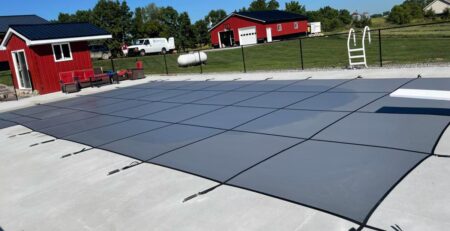
In the state of Michigan, you have to have a fenced in pool and not every fence around a yard makes the cut.  It has to be a certain types of materials, doors and latches, etc.  You can invest in an autocover where fabric covers your pool and you can just use a switch to open and close your pool – this gets you out of the fence requirement but if you have any deer that run through your back yard, at some point, one might put a hoof through so you may still want a fence.  An Autocover does look cool, and saves on heating and chemicals and maintence/labor to keep clean but it will run you about double the cost of fencing and could be between $16000-$22000 of your cost depending on size and shape of your pool.  Autocovers are most common for rectangle pools due to the track and not running it over your concrete.  With saltwater pools, you don’t have the chemical costs that made the payback on autocovers a lot faster.  One caveat we need to mention with autocovers – is you do need to open and close them, especially during hot season to allow for “venting” of the pool from trapped gases and such.  

Ways to Reduce Your Inground Pool Construction and Overall Costs

When researching design options and considering your pool and astethics , these tips can help you reduce inground pool installation costs:

  • Choosing a simple deck – you can have colored and stamped concrete as well as cantilever coping – if you were to keep your coping aluminum and stick with standard brushed concrete, typically you can save about $5000-$7000.  If you stick with just the standard concrete (4x4x4x8) you can also save a few thousand however if you pour standard brushed concrete in more than one batch, it is extremely difficult to get concrete color to exactly match, even with standard brushed concrete.
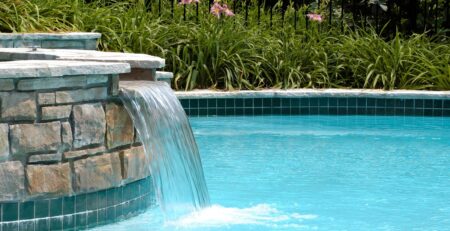
  • Forego Bells and Whistles – Slides are great features, so is lighting, and water features – but all those can increase you overall installation cost of your pool by several thousand.  We do believe it is best to get the pool you want as some of thise cannot be added later, this is strictly for if you  are looking for ways to get a pool for less money.  We would like to tell everything is worth it (well except for a leaky slide, lol) but if you are look for $2000-$4000 to trim from your budgets, this is a good place to find it and even more with that $5000 slide.
  • Build a Smaller pool – Smaller pools save on space and reduce the installation cost. If you have a tight budget, ensure you keep the size of your pool as modest as possible.  It will also cost less to heat and maintain it and the fencing and landscaping reduce as well.  If you can forgo a deep end, you can also save a few thousand dollars depending on the size of your pool.

West Michigan Inground Swimming Pools

Polynesian Pool & Spa has been servicing Grand Rapids, Byron Center, Lansing, Traverse City, the lakeshore and all parts inbetween with inground swimming pool construction and service since 1971. Our professionals have the experience and expertise to give you the backyard of your dreams! Contact us today at (616) 363-4161 to get started on your inground swimming pool.
RECEIVE A FREE ESTIMATE


[custom-facebook-feed feed=1]